




A complete guide to compensation strategy and planning
Table of Contents
- Key takeaways
- Role of compensation strategies
- Elements of compensation
- Creating an effective strategy
- Bringing it to life
- FAQs

UK Salary Trends Report 2026
With 41% of UK workers looking or planning to look for a new role this year, compensation is central to employers’ talent attraction and retention efforts. However, as worker demands evolve, employers need a compensation strategy tailored to the priorities and expectations of a workforce seeking stability, development and balance.
UK Salary Trends Report 2026
In this article, we’ll be exploring compensation strategies and planning, and looking at how you can craft packages that help you attract and retain talent.
Key takeaways
- Employers need a compensation strategy that reflects shifting worker priorities, including flexibility, development and work-life balance.
- 53% of workers won’t apply for roles without progression opportunities.
- Work-life balance is workers’ top career goal, ahead of earning more money.
- Benefits strongly influence retention, with 76% of stayers satisfied with their package.
- Cost-of-living pressures mean employees expect more support from employers.
- Employers should benchmark pay and benefits against the market to stay competitive and avoid over- or under-paying.
- A modern compensation strategy must balance pay, benefits, flexibility, and development.
- Compensation frameworks should clearly outline pay bands, bonus structures, eligibility criteria and review processes.
- Transparent communication about how compensation decisions are made helps build trust and improve satisfaction.
Why is a compensation strategy so important?
With today’s workforce being more selective, values-driven and vocal about what they expect from employers, a strong compensation strategy is no longer optional. Let’s delve into the specifics.
Attracting talent in a competitive market
With candidates becoming increasingly selective, a competitive compensation offering is one of the most effective tools at employers’ disposal for appealing to talent.
While salary is still the decisive factor for many, candidates now also screen roles based on:
- Benefits
- Flexibility
- Development opportunities
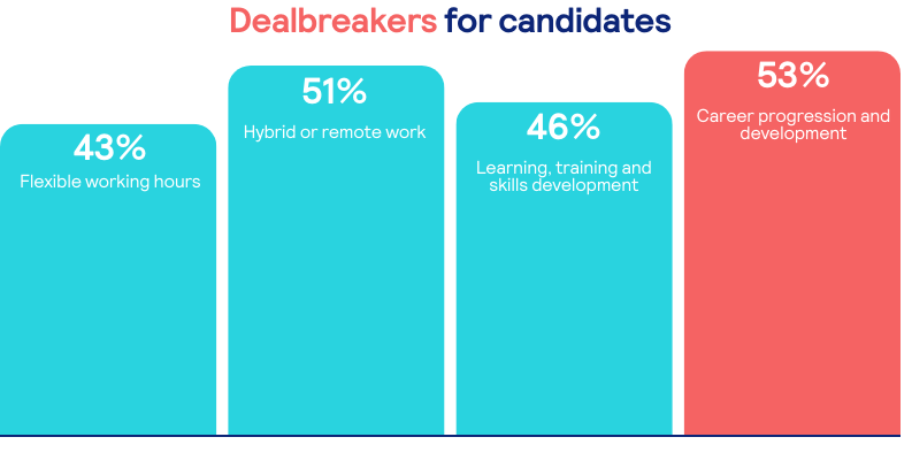
Our research found that 53% of workers wouldn’t apply for a role that doesn’t offer progression and development, and 51% say the same for hybrid and/or remote work. As a result, compensation strategies increasingly need to go beyond pay and include a broader value proposition.
Retaining top performing staff
While 41% of workers plan to stay in their current role this year, their loyalty is often tied to how valued they feel.
Among those who plan to stay put, 76% say they are satisfied with their current benefits. As a result, it appears that benefits have a key role in employers’ retention efforts.
Crucially, employers who invest in meaningful, relevant benefits are more likely to maintain a stable workforce and reduce their turnover costs.
Supporting wellbeing and financial resilience
One key factor that has reshaping employee expectations around compensation is the cost-of-living pressures many have faced.
We found that 53% of UK workers have cut back on leisure spending and 32% on essentials. As a result, many employees will be looking to their employers for support.
Compensation strategies that provide competitive pay, strong benefits and progression opportunities can therefore help employees feel more secure and engaged.
Strengthening employer brand
A reputation for providing fair and competitive compensation only serves to enhance employer brand, helping organisations to stand out and become an employer of choice.
Our research shows that employees increasingly expect:
- Transparency
- Fairness
- Flexibility
As a result, employers who can demonstrate these values are well positioned to improve their employer brand and subsequently attract high-quality candidates and retain their existing staff.
Key elements of a modern compensation strategy
A compensation strategy defines the philosophy and principles behind how an organisation pays and rewards its people. It should therefore align with organisational goals, culture and financial sustainability.
Key components therefore include:
- Base pay: Base salary remains the foundation of compensation, and must be competitive, fair and aligned with market benchmarks. With workers better-informed than ever, and pay transparency becoming an expectation, employers need clear salary ranges, progression criteria and regular reviews.
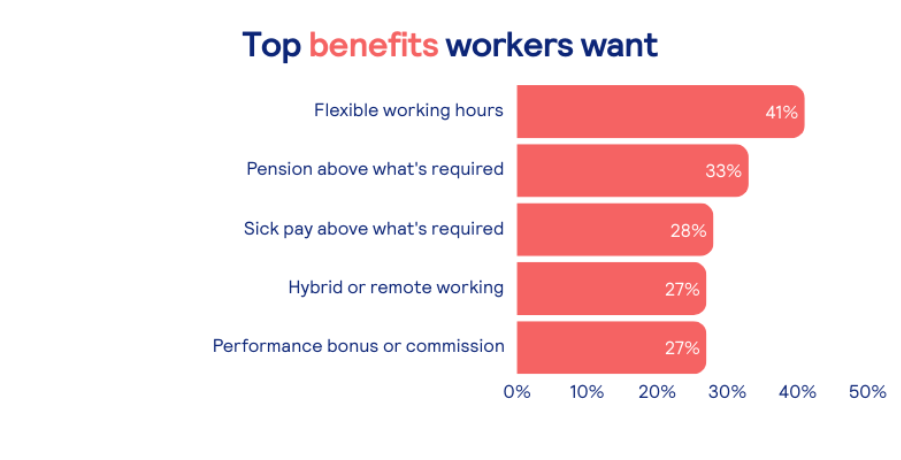
- Variable pay: Performance bonuses, commission and incentive schemes can motivate employees and align their efforts with organisational goals. With 27% of workers listing performance bonuses or commission among their top desired benefits, variable pay remains a valuable tool, but it must be structured clearly and communicated transparently.
- Benefits: Benefits have become a vital factor in job choice and retention, with workers increasingly prioritising flexible working hours (41%), pension contributions above the minimum (33%) and sick pay above statutory requirements (28%). These preferences reflect a desire for security, flexibility, and long-term stability.
- Flexibility: Flexible working hours are the number one desired benefit for UK workers, while a lack of flexibility is a deal-breaker for 43% of candidates. Furthermore, work-life balance is workers’ top career goal, even surpassing earning more. This shift means flexibility is not just another perk, it’s a core component of a successful approach to compensation.
- Development opportunities: Career development is a critical part of compensation, with over half (53%) of workers saying they wouldn’t apply for a role without clear progression and opportunities. Employers therefore need to treat development as a core part of their offering whenever feasible.
- Equity and fairness: A strong compensation strategy helps to ensure internal equity, meaning employees in the same or similar roles, with similar responsibilities, are paid fairly relative to one another. This can build trust and reduce the risk of dissatisfaction leading to turnover.
- A clear framework: A compensation strategy is only effective when supported by a well-defined framework. This should outline salary structures, explain how bonuses are awarded and set out the benefits available alongside eligibility criteria. It should also define how and when pay reviews take place and establish expectations for how compensation information is communicated.
Creating an effective compensation strategy
Crafting an effective compensation strategy requires significant planning and attention to detail to ensure success.
Below we’ve outlined the steps you can take to start implementing comprehensive compensation plans for your organisation.
1. Define organisational goals
A compensation strategy should align with the wider goals of an organisation, such as:
- Attracting talent
- Retaining existing employees
- Boosting performance
Once these organisational goals have been identified and understood, you can start to craft an approach to compensation that supports them.
2. Assess internal factors
Any effective compensation strategy needs to be financially sustainable.
While salary is a clear priority for candidates and employees, it’s not always viable for employers to give everyone a significant salary hike on a regular basis. A compensation strategy therefore needs to be realistic and sustainable.
As a result, it’s crucial to work within budget constraints, ensure equal pay and create alignment with the wider organisational culture.
3. Review existing roles and descriptions
Reviewing existing roles and job descriptions across the workforce is vital in crafting a successful approach to compensation.
Once this has been completed, you can create a framework for organisational compensation which can be adjusted when necessary and clearly shows the targets to be achieved for salary increases and performance-related bonuses.
4. Conduct market research
As employers look to recruit top talent amid skills shortages, an attractive and competitive compensation offer can make all the difference.
However, before you raise salaries too high (or drop them too low) to appeal to candidates, it’s crucial to research and examine market data and conduct salary benchmarking within the sector.
This can be done by analysing surveys, reports, and competitor compensation to understand market trends.
5. Gather employee input
Research shows that 41% of people in the UK feel that they are paid less than they should be.
As a result, collecting employee feedback on compensation can help address any gaps between what they’re paid and their expectations, and encourage active participation in organisational goals and plans.
This can also fit into your employee voice strategy, which helps employees feel listened to and valued.
6. Define compensation principles
To ensure the compensation your organisation offers employees can effectively boost wellbeing and create a positive culture, it’s important to determine the principles beyond the overarching strategy.
This might include, for example:
- Pay for performance
- Internal equity
- External competitiveness
7. Design a compensation structure
The next stage is to decide on the components of your compensation package.
This includes the basics set out above, including:
- Base salary bands
- Pay structures
- Bonuses
- Incentives
- Benefits
To attract talent and retain top performers, it makes sense to establish salary ranges based on industry benchmarks, and to ensure that equal pay is given to roles of equal value in the organisation.
8. Link performance to compensation
By aligning employee goals with organisational objectives using an effective performance management system, employers can tie compensation offerings to performance.
This then works to create a reward system that effectively incentivises employees, thereby helping to boost productivity and improve outputs.
9. Communicate policies
A successful compensation strategy is one that’s clearly communicated.
Being open and transparent about how compensation decisions are made (including the criteria used) can help improve employee satisfaction levels and boost both productivity and performance, as employees understand what they need to achieve to earn a salary increase.
10. Monitor and evaluate
After its implementation, a compensation strategy needs to be reviewed and evaluated to make sure it’s working well.
Performance metrics that can help identify what’s working (and what’s not) include:
- Feedback from employees at every level
- Turnover rates in the workforce
Monitoring and evaluating the strategy means you can make adjustments whenever needed to ensure you stay competitive and meet, or even exceed, employee expectations.
11. Stay compliant
Putting together a compensation strategy is a great opportunity to gather information (from internal employee feedback to industry salary benchmarks) and ensure compliance with employment laws, including equal pay.
Staying compliant with changing or new employment law is the responsibility of an employer, so having compliance as an integral part of the organisation-wide compensation strategy makes sense.
Bringing your compensation strategy to life
A modern compensation strategy must do more than set pay. It needs to reflect what today’s workforce values most: flexibility, development, fairness and long-term stability.
With candidates increasingly selective and many workers reassessing their priorities, employers who take a structured, transparent approach to compensation will stand out. By aligning pay with organisational goals, listening to employee expectations, and building a framework that balances salary, benefits, and progression, organisations can attract top talent, retain high performers, and strengthen their employer brand.
The most effective strategies evolve with the workforce, and the organisations that adapt will lead the way.
Discover how to balance salary and benefits in your approach to compensation
UK Salary Trends Report 2026
Frequently asked questions (FAQs)
What is a compensation strategy?
A compensation strategy outlines how an organisation pays, rewards and supports employees in a way that aligns with its goals, culture and financial sustainability.
Why is compensation strategy important?
It helps attract talent, retain employees, support wellbeing and strengthen employer brand, all critical in a competitive labour market.
What factors influence modern compensation expectations?
Flexibility, development opportunities, work-life balance and meaningful benefits now rank alongside salary.
How often should compensation be reviewed?
Most organisations review annually, but market volatility may require more frequent benchmarking.
What benefits matter most to workers today?
Flexible hours, enhanced pension contributions, sick pay above statutory levels, hybrid/remote options and performance bonuses.
How does flexibility fit into compensation?
It’s now a core component, with 43% of candidates rejecting roles that lack it.
What role does development play in compensation?
Over half of workers won’t apply for roles without progression opportunities, making development a key part of the value proposition.
How can employers ensure fairness in compensation?
By maintaining clear salary structures, consistent criteria and transparent communication.
What is a compensation plan?
It’s the operational framework that puts the strategy into action, covering pay bands, benefits, incentives, reviews and governance.
How can employers stay competitive?
By monitoring market trends, gathering employee feedback and evolving their compensation approach to match shifting expectations.
Explore articles




Receive the latest recruitment resources and
advice to boost your hiring
By providing us with your details you agree to our privacy policy and for us to keep you updated with the latest news, events,
and special offers from Totaljobs.