




How to create employee benefits packages to attract and retain top talent
Table of Contents
- Key takeaways
- What are employee benefits?
- Types of employee benefits
- Popular employee benefits
- Building a competitive package
- Benefits packages that work
- FAQs
UK Salary Trends Report 2026
Employee benefits packages play a crucial role in a competitive approach to compensation. With 41% of workers looking or planning to look for a new role this year, it’s vital for employers to offer benefits that genuinely resonate.
Unlock cutting-edge employee benefit trends with our latest research
In this guide, we’ll look at how you can create an employee benefits package that can help attract top talent and keep current employees motivated.
Key takeaways
- Building a competitive benefits package helps employers stand out in a market where 41% of candidates plan to look for a new role this year
- Offering a blend of financial, wellbeing and development benefits supports a more resilient, motivated workforce
- Investing in learning and skills development helps employers’ close capability gaps while supporting long?term career progression
- Strengthening financial benefits, such as pensions, childcare support and discount schemes, helps employees manage rising living costs
- Clear, consistent communication around benefits increases awareness, uptake and perceived value
- Tracking benefit usage and gathering regular feedback ensures offerings remain aligned with evolving employee expectations
- Reviewing and refreshing benefits annually helps organisations stay competitive and responsive to workforce needs
What are employee benefits?
Employee benefits are simply the incentives in an employer’s compensation offering to staff and prospective candidates outside of their base salary.
This can include:
- Monetary rewards
- Non-monetary incentives
75%
of workers are satisfied with their benefits
While a benefits package may include components that employers are legally required to offer, such as paid holidays, sick pay and pension contributions, it is the additional, value-added components that help organisations stand out from the crowd.
Why do employee benefits matter?
While salary remains a major factor in candidate’s decision-making when choosing a role, benefits are having an increasingly significant impact.
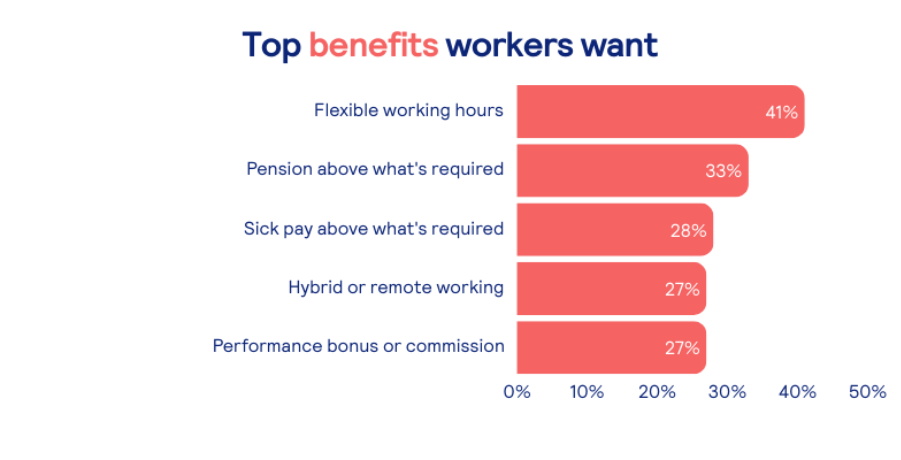
Our research found that 53% of workers wouldn’t apply for a role without career progression on offer, while 51% say the same for hybrid/remote working.
As a result, offering these types of desirable benefits can allow employers to:
- Boost talent attraction: An effective benefits package helps employers top-tier candidates by demonstrating that their organisation is keeping pace with their expectations. Furthermore, 43% of candidates saying that a lack of flexibility is a deal-breaker for them highlights how employers can leverage cost-effective benefits to differentiate themselves from competitors.
- Improve job satisfaction: Workers value employers that take active steps to support both their work and personal lives. This is especially important with 53% of workers cutting back on leisure spending and 32% on essentials, increasing the value of benefits that help reduce financial pressure and improve wellbeing.
- Enhance retention: A strong employee benefits offering fosters long-term loyalty, with our research of the 41% of workers planning to stay in their role this year, 76% are satisfied with their benefits. Furthermore, for employers unable to offer higher salaries, benefits can be the differentiator that helps them retain top performers
Types of employee benefits
When it comes to putting together a comprehensive employee benefits package, there are various different incentives employers can offer to entice jobseekers to apply for their open roles.
Let’s take a closer look at the four main categories of benefits employers can choose from.
1. Health and wellbeing
Benefits focused on the physical and mental wellbeing of workers are key to ensuring a healthy, motivated and productive workforce.
With employee wellbeing directly tied to job satisfaction and retention, organisations that prioritise this area are more likely to reduce absenteeism and increase employee engagement.
Health and wellbeing benefits encompass a wide range of support measures, including:
- Subsidised gym memberships to encourage physical fitness and promote a healthier lifestyle.
- Private medical insurance, offering faster access to healthcare and reducing financial burdens for employees.
- Dental insurance and eye care vouchers to support regular preventative care.
- Mental health resources, such as counselling services or Employee Assistance Programmes (EAPs), to address stress and support mental health.
- Health screenings to identify and mitigate health risks early.
- Life insurance to provide employees with peace of mind about their family’s financial security.
By implementing these benefits, employers demonstrate a commitment to their duty of care, helping teams access the resources they need to thrive both professionally and personally. Those that take a proactive approach to employee wellbeing are likely to see a positive impact on team morale, productivity, and long-term retention.
2. Financial
Financial benefits help employees feel secure and supported.
For example, pension contributions remain one of the most valued benefits, aligning with the 33% of workers who prioritise pensions above what’s legally required from employers.
Financial support can also include:
- Performance bonuses
- Discount schemes
- Childcare support
- Retirement planning resources
With many workers adjusting their spending due to rising costs, financial benefits can significantly improve overall satisfaction.
Furthermore, data from the Organization for Economic Cooperation and Development (OECD) shows that UK workers face the highest childcare costs as a percentage of the average wage, while our own research found that 85% of parents face financial challenges from balancing childcare responsibilities with work.
Given these factors, financial assistance for childcare costs has become a desirable form of support among working parents.
3. Educational
Offering educational benefits provides employers with a powerful way to invest in their workforce’s personal and professional growth while addressing skills gaps within the organisation.
By supporting employees’ development, organisations not only foster a culture of continuous learning but also drive productivity, innovation and engagement.
Furthermore, with 46% of workers saying they wouldn’t apply for a role without learning, training, and skills development, education?focused benefits are essential for attracting ambitious talent.
Educational support can be integrated into an overall benefits offering by:
- Providing access to online learning platforms that offer courses tailored to individual and business needs.
- Setting training budgets per employee to allow team members to pursue relevant qualifications or certifications.
- Starting mentorship schemes to encourage knowledge sharing and foster career development.
- Offering flexible benefits, such as study leave or subsidised tuition fees, to support employees balancing work with formal education.
4. Work-life balance
In recent times, work-life balance has becoming one of the defining priorities of UK workers when considering their career options.
Our research shows that flexible working hours is actually the #1 desired benefit (41%) for candidates. As a result, organisations who can offer flexibility can gain a significant competitive advantage in the hiring market.
Benefits employers can offer to support a healthy work-life balance include:
- Hybrid and remote working
- Additional paid time off
- Family-friendly policies
Perks of this nature also provide employers with an opportunity to support working parents and benefit from the skills and experience they bring to the workplace, with 91% saying that family-friendly practices, such as extended paid parental leave, are key when deciding on a job offer.
Most popular employee benefits
With candidate priorities continually evolving, employers should be aware of the most in?demand benefits and tailor their offerings accordingly.
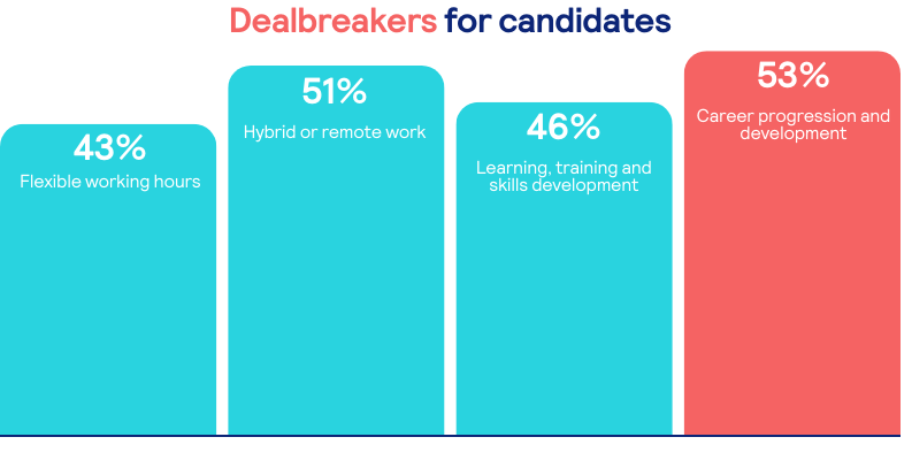
Based on current trends, the top five benefits workers want are:
- Flexible hours (41%): Flexible hours remain the most sought?after benefit because they give employees greater control over how they balance work with personal commitments. For many, flexibility reduces stress, cuts commuting costs and supports overall wellbeing. For employers, offering flexible hours is one of the most cost?effective ways to boost attraction and retention, especially as modern workers increasingly prioritise autonomy and work?life balance.
- Pension contributions above legal minimum (33%): Employees value strong pension contributions because they provide long?term financial security and demonstrate that an employer is invested in their future. With many workers feeling the pressure of rising living costs, enhanced pensions offer reassurance and stability. For employers, competitive pension offerings help attract experienced talent and strengthen loyalty among staff planning for the long term.
- Enhanced sick pay (28%): Enhanced sick pay signals that an organisation genuinely cares about employee wellbeing. Workers want the peace of mind that they can recover from illness without financial strain. For employers, offering better?than?statutory sick pay helps reduce presenteeism, supports a healthier workforce and builds trust, all of which contribute to stronger engagement and productivity.
- Hybrid/remote working (27%): Hybrid and remote working options remain highly desirable because they offer flexibility, reduce commuting time and support better work?life integration. Employees increasingly expect the ability to work from home at least part of the week. For employers, hybrid models widen the talent pool, improve retention and can even reduce overhead costs while maintaining, or improving, productivity.
- Performance bonus or commission (27%): Performance?based bonuses appeal to employees because they offer a clear link between effort and reward, giving them the opportunity to increase their earnings without relying solely on salary increases. For employers, bonuses and commission structures can drive motivation, align teams around shared goals and reward high performance in a financially sustainable way.
How to build a competitive employee benefits package
When it comes to putting together an attractive benefits package that appeals to candidates and optimises the retention of existing members of staff, there are several best practices that employers should keep in mind.
Let’s take a closer look.
1. Define the benefits structure and level of personalisation
At the outset, employees need to determine if they want to offer all of their employees a standard benefits package, or if they will provide different offerings to their workforce based on job level, location, or length of service.
Alternatively, employees can structure their package without a blanket approach, allowing staff to opt into benefits as and when they need them or unlock extra perks as a reward for loyalty.
This approach can diversify a benefit package and allows staff to tailor their package to their individual needs.
2. Determine employee benefits guidelines
Any core package will need to include legally required benefits, while opt-in or value-added perks can include a variety of options such as salary sacrifice schemes, discounts for streaming services, or wellness apps, to name a few.
Guidelines may include:
- Eligibility criteria: Employers should establish the boundaries for budget purposes. For instance, a C-Suite level employee can only access a company car if they live a certain number of miles from their nearest office
- Enrolment process: Determine which benefits staff automatically enrolled to, which are voluntary and which have set times of the year when employees can sign up. For example, a new starter might be given one month to confirm their employee pension contribution for the year.
- External factors: Outline if and how external factors will trigger changes to benefit packages. This could include one-off cash payments to support employees faced with high inflation and rising living costs.
3. Communicate the details to staff
Research suggests that almost one in five (18%) of UK workers feel that there isn’t enough information readily available to them about to benefits package on offer from their employer.
As a result, employers can look to increase the uptake of the benefits they offer by implementing a comprehensive program of communication.
This could include:
- A central online hub or intranet where employees can search for and view benefits.
- Employee profiles where staff can see both the benefits they already have access to and their opt-in options.
- Proactive reminders of timeframes related to benefits, for example the cut-off point when staff can buy and sell annual leave.
- HR-led sessions whenever a new benefit is introduced to increase awareness.
- FAQ documents related to benefits and clear terms and conditions.
4. Track take-up and invite feedback
At times there can be a mismatch between what an employer thinks their staff want from a benefits package and the reality.
As a result, it can be useful to track the uptake of different benefits and, if this is low, consider the reasons why. For example:
- Staff not being aware of what’s available
- Overly long and complex opt-in processes
- Packages not matching employee expectations
Obtaining this information on benefit usage may require gathering data from third parties or exploring how many purchases have been made using an organisation’s unique voucher code.
Furthermore, surveying staff to see what they want more or less of, and what could make their working and personal lives better, can help employers feel confident that their benefits packages add real value.
Building a benefits package that works
A strong benefits package is a strategic tool that shapes how people feel about working for your organisation. The employers succedding today are those who prioritise flexibility, wellbeing, financial security and development, and communicate these clearly and consistently. When benefits genuinely support people’s lives, they boost attraction, strengthen retention and elevate your employer brand without relying solely on salary.
The formula is simple: listen to your workforce, personalise where you can, review regularly and make benefits a visible, living part of your culture. Do that, and you become the kind of organisation people want to join and stay with for the long-term.
Unlock game-changing insights to craft a benefits package that sets you apart from the competition
UK Salary Trends Report 2026
Frequently asked questions (FAQs)
How do I know which benefits my employees actually want?
Start by asking them directly through surveys, focus groups or pulse checks. Combine this with usage data from your current benefits to understand what’s valued and what’s being overlooked.
Should all employees receive the same benefits package?
Not necessarily. Many organisations offer a core package for everyone and then layer optional or flexible benefits on top to support different needs and life stages.
How often should I review my benefits offering?
A yearly review is a good baseline, but major organisational changes, market shifts or employee feedback may require more frequent updates.
What’s the best way to communicate benefits to employees?
Use multiple channels, for example onboarding, intranet hubs, email reminders, manager briefings and HR sessions. Clear, repeated communication increases awareness and uptake.
How can I improve uptake of the benefits we already offer?
Simplify enrolment, remove unnecessary steps and make sure employees understand how each benefit works. Visibility and ease of access are key.
Are flexible benefits worth the administrative effort?
Yes. Allowing employees to tailor their benefits increases relevance, satisfaction and perceived value, often without increasing overall cost.
How do benefits support retention?
Benefits that improve wellbeing, financial security and career development help employees feel supported and valued, reducing the likelihood of them looking elsewhere.
What role do managers play in benefits engagement?
A big one. Managers are often the first point of contact for questions about flexibility, development and wellbeing. Equipping them with clear information boosts awareness and trust.
Should benefits differ for remote, hybrid and on?site employees?
They can. While core benefits should remain consistent, additional perks, such as home?working support or travel subsidies, can help ensure fairness across different working arrangements.
How do I measure whether my benefits package is effective?
Track usage, gather feedback, monitor retention and analyse recruitment outcomes. If benefits are being used, valued and influencing decisions, your package is working.
Explore articles





Receive the latest recruitment resources and
advice to boost your hiring
By providing us with your details you agree to our privacy policy and for us to keep you updated with the latest news, events,
and special offers from Totaljobs.