

UK jobs market October 2026: is the labour market finally turning a corner?
Table of Contents
- Payroll employment rebounds
- Employment outlook improves
- The catch: vacancies keep falling
- Wage growth remains positive
- What it means for recruiters

Faster hiring toolkit
DownloadEach month, Julius Probst, our Senior Economist at The Stepstone Group, breaks down the latest ONS Labour Market Overview for recruiters across the UK. You can also watch him walk through the data on Recruitonomics, the monthly video update from our partners at Appcast.
After months of mixed signals, this month’s ONS data has some genuinely good news in it. Payroll employment is growing again. Unemployment is falling. Real wages are still ahead of inflation.
While it’s too early to declare we’re out of the woods just yet, and I’ll explain why below, this is a more encouraging picture than we’ve seen in a while. Here’s what the numbers actually say.
Payroll employment beats expectations
For the first time in over a year, payroll employment is growing meaningfully. Job growth in September came in close to 13,000, which is better than analysts expected.
Plus, in a welcome revision, August’s figure was upgraded from minus 26,000 to approximately plus 1,000. A significant turnaround.
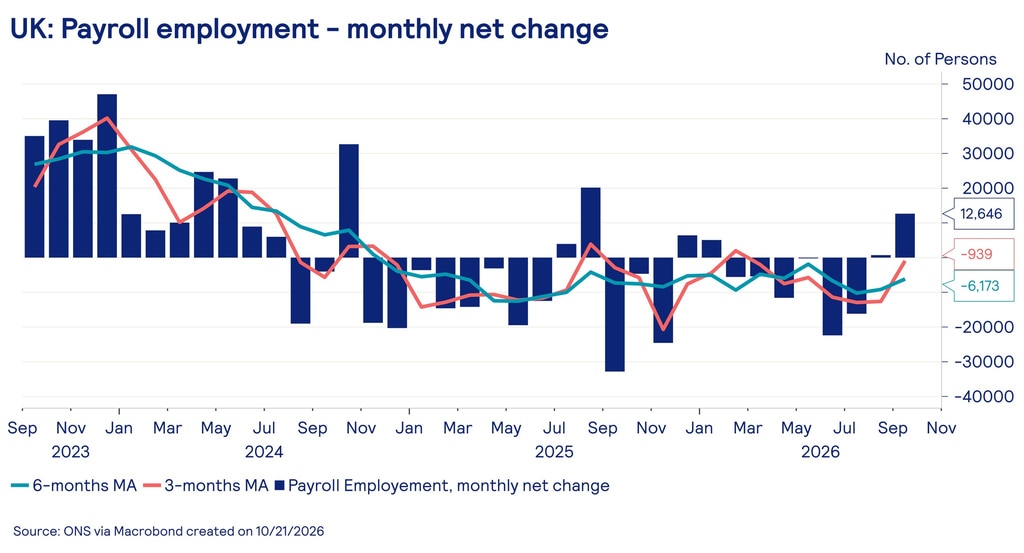
(A quick but important note on the data: as I’ve flagged before, the first release of payroll figures is often imprecise and subject to revision. August is a case in point. Take early estimates as directional rather than definitive.)
The bigger question everyone is asking: does two consecutive months of positive job growth mean the labour market has stabilised?
Possibly.
But we’ve been here before.
Last year saw a similar pattern (two months of growth in July and August 2025, then again in December and January) before employment losses accelerated again. Worth watching closely, but not time to declare victory just yet.
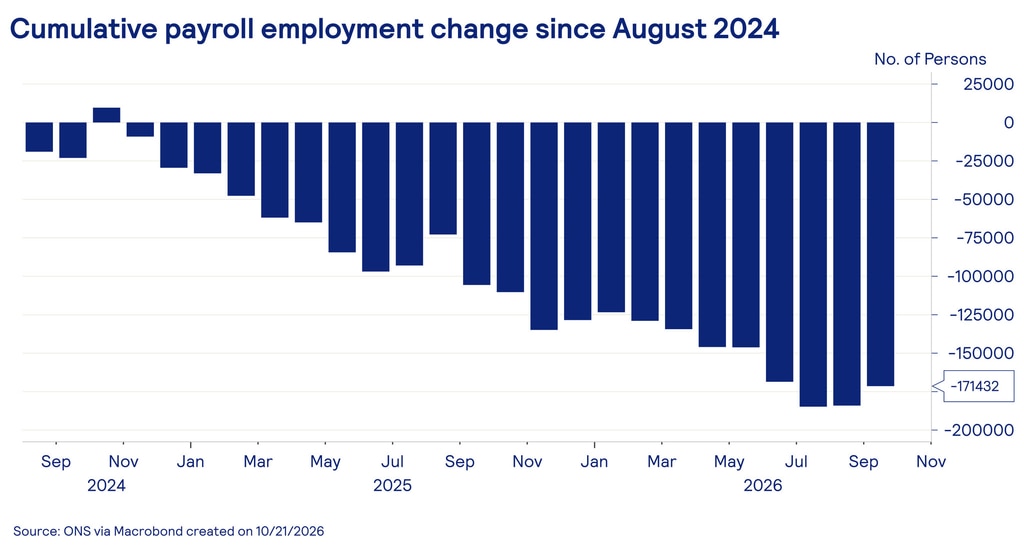
What is clear is that cumulative payroll losses since summer 2024 now stand at around 170,000.
The labour market has taken a meaningful hit over the past two years, largely driven by the surge in employment costs (successive minimum wage increases and the rise in employer National Insurance contributions) that has constrained hiring across many businesses.
Employment up, unemployment down
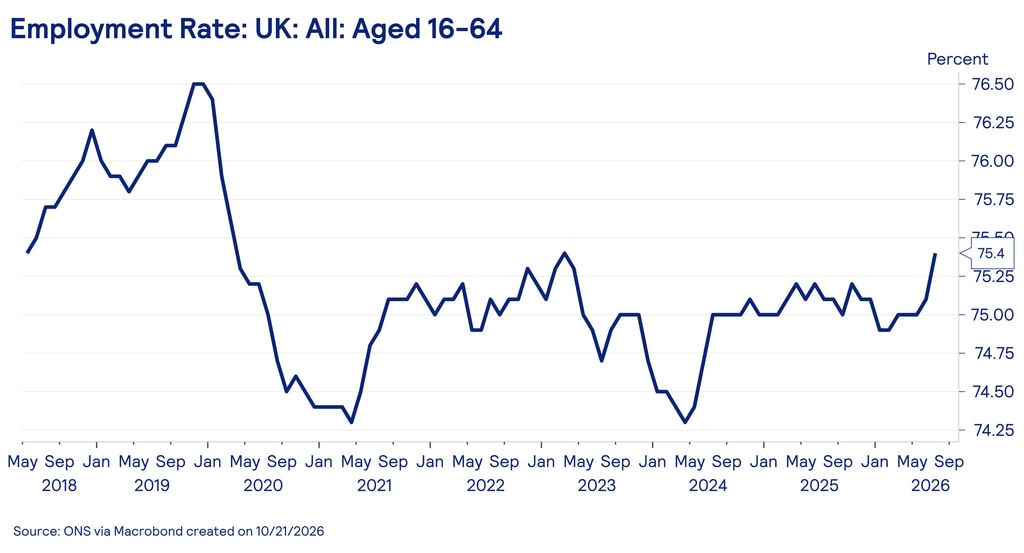
The employment rate for workers aged 16 to 64 has ticked up to 75.4%, marking a three-year high.
Unemployment has also fallen to 4.7%, down half a percentage point from its peak of 5.2% last winter.
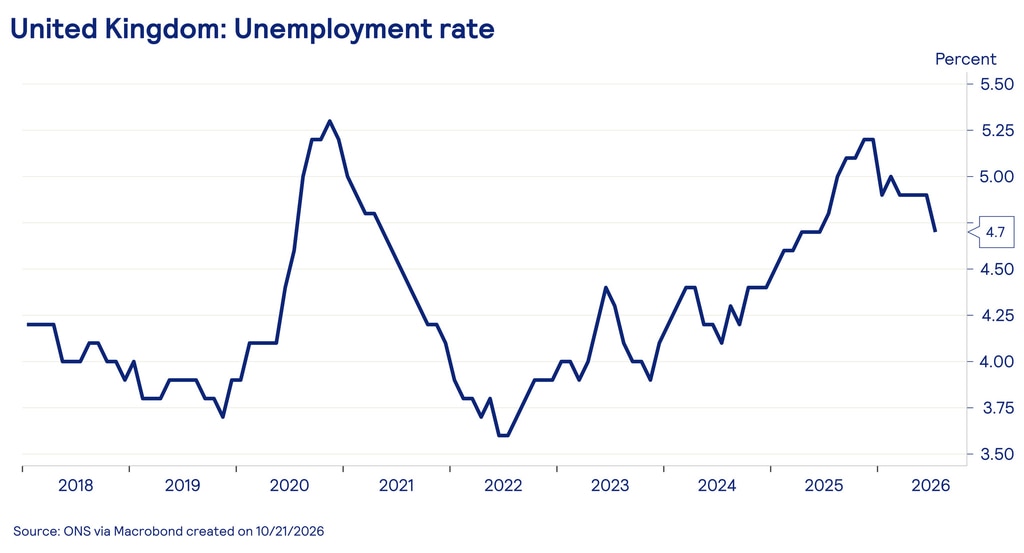
The usual data caveat applies here. The ONS has acknowledged ongoing reliability questions with its Labour Force Survey due to falling response rates, with a methodology update not due until 2027. Individual monthly figures should be read with that in mind.
That said, a 0.5 percentage point fall from peak is now a trend that’s hard to dismiss.
Vacancies keep falling, and that’s the catch
Here’s where the picture gets more complicated.
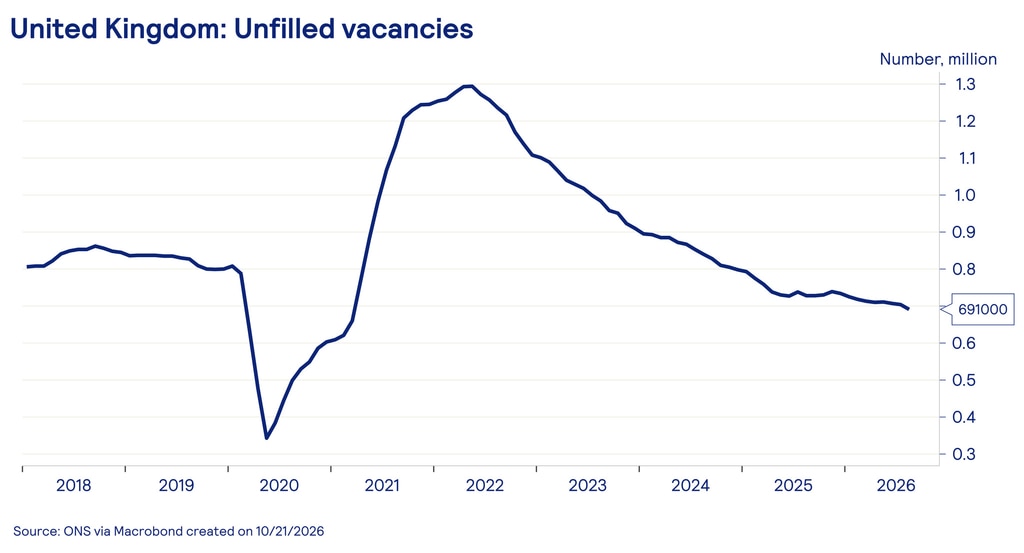
Despite the more positive employment figures, vacancies have continued to fall. They’re down to around 691,000, the lowest level in over 12 years outside of the pandemic.
For recruiters, this matters.
Fewer vacancies mean fewer opportunities for candidates to move, which is part of why so many workers currently feel stuck – the market isn’t offering them compelling outside options.
It’s also one of the key drivers behind rising youth unemployment. And according to ONS Vacancy Survey feedback, it’s predominantly smaller businesses pulling back on hiring, still feeling the pinch from higher employer costs.
If you’re hiring right now, especially in a smaller organisation, you’re operating in a market where many of your peers have stepped back. That’s a competitive advantage if you can move efficiently.
Our Faster Hiring Toolkit has practical guidance on where hiring processes typically lose time and how to tighten them up, which matters more than ever when good candidates don’t stay available for long.
Wage growth is still positive, but watch this space
Nominal wages are growing at around 4%, while inflation currently sits at 3.1%.
Real wages are in positive territory, which has helped support consumer spending and contributed to the UK’s better-than-expected economic performance this summer.
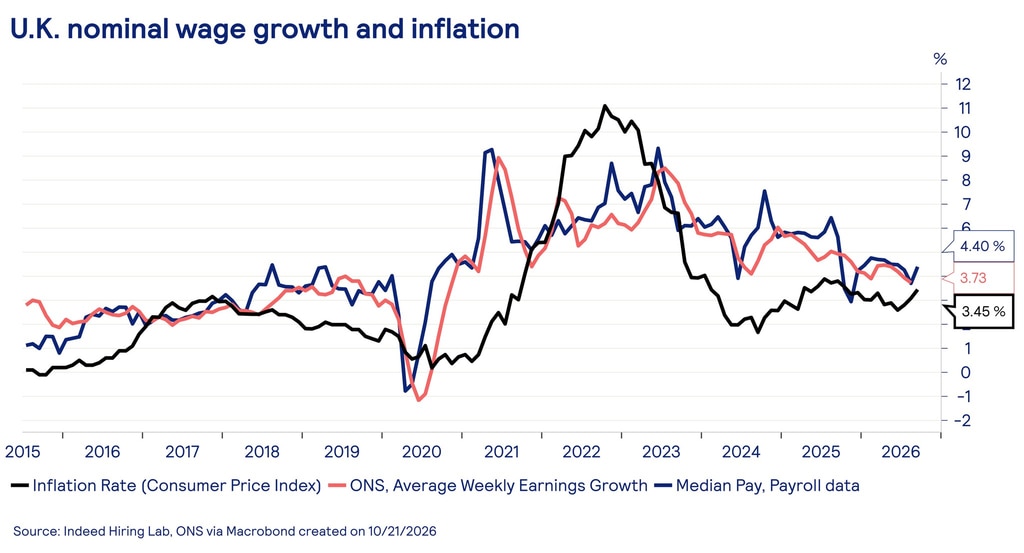
The caution: this gap is likely to narrow.
The Bank of England projects inflation rising to just over 4% by Q1 2027, which would put real wage growth into negative territory at the start of next year. The effects of the oil price shock driven by the Iran war haven’t fully played out yet. Workers’ pay has held up well so far, but the picture in early 2027 may look quite different.
So, that’s the macro picture. Here’s what it means if you’re hiring right now.
What does this mean for recruiters?
Two consecutive months of positive payroll growth is the best news the UK labour market has produced in a while.Whether it marks a genuine turning point or another false dawn remains to be seen, but the direction of travel is more encouraging than it has been at any point in the past year.
For recruiters, the nuance matters.
The headline numbers are improving, but vacancies are still falling and hiring remains structurally subdued. Businesses, particularly smaller ones, are still cautious about expanding headcount given ongoing uncertainty around costs and the macroeconomic outlook.
What that means in practice: the candidates are out there, but many aren’t actively looking.
Our research consistently shows that around 66% of UK workers are passively open to the right opportunity without actively searching. In a market where your competitors are pulling back, reaching that passive pool is one of the clearest advantages available.
It also means that when you do find the right candidate, speed matters.

In a low-vacancy environment, good people have options even when the market feels quiet – and a slow or opaque hiring process is still one of the most common reasons candidates walk away.
In a low-vacancy environment, good people have options even when the market feels quiet – and a slow or opaque hiring process is still one of the most common reasons candidates walk away. If you haven’t already, it’s worth taking a look at our Creating Trust in Hiring webinar for practical guidance on building a process that keeps candidates engaged from first contact to offer.
The cautious optimism in this month’s data is real. The opportunity for recruiters who move well is there. The employers who make the most of this window will be the ones who are visible, fast, and transparent.
One more thing to watch: the UK Autumn Budget lands on 28 October.
With employer costs already a significant constraint on hiring, what the Chancellor announces on tax, National Insurance and public spending will matter directly for recruitment plans heading into 2027.
I’ll be back with a Budget breakdown shortly after – watch this space.
Julius Probst, Senior Labour Market Economist, The Stepstone Group. Data: ONS Labour Market Overview, October 2026. Additional data: Totaljobs Hiring Trends Update Spring/Summer 2026 (n=885 UK employers). Watch me discuss this month’s data on Recruitonomics.
Explore articles