

UK Budget 2026: Little relief for employers or the jobs market
Table of Contents
- The economic backdrop
- Household energy subsidies
- State pensions
- Minimum wage
- Visa changes
- First-time buyer subsidies
- Savings and rental taxes
- What does it mean for recruiters?
Analysis by Julius Probst, Senior Labour Market Economist at The Stepstone Group. Adapted from an article originally published on Recruitonomics, our partners at Appcast.
The new Burnham government announced a range of economic policies in its Budget on Wednesday 28 October, the UK’s annual fiscal event. While some measures offer welcome relief, the Budget does little to address the deeper challenges facing the economy and jobs market.
Here, I look at six of the key announcements and assess what they mean for economic growth, employers and hiring.
The economic backdrop: A labour market still under pressure
Even with growth surprising on the upside recently, the UK economy remains in a difficult position.
Public finances are under severe strain. Interest rates remain elevated, and the government now spends more on debt interest than on defence, around £120 billion a year.
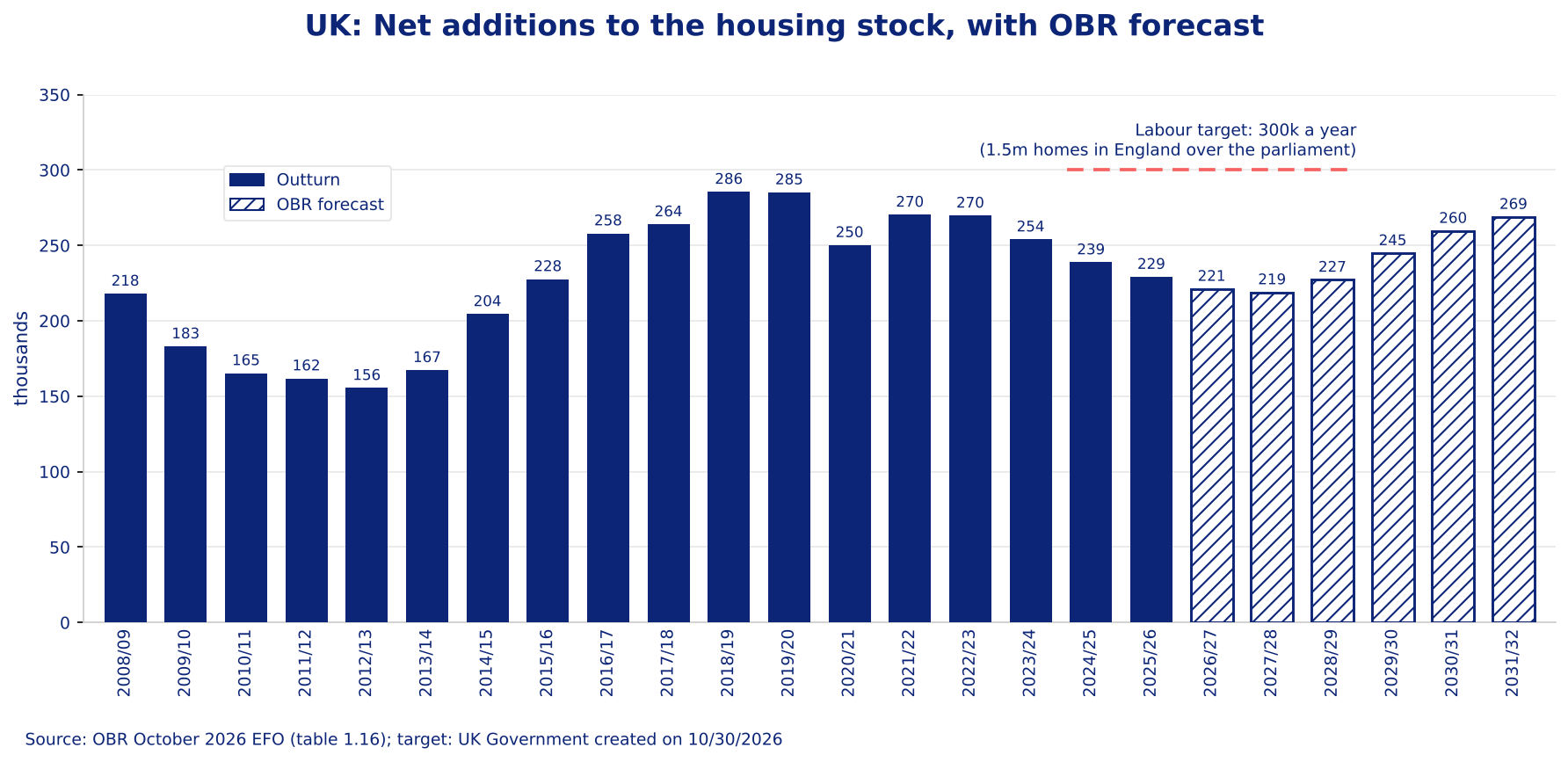
Housebuilding has fallen sharply as construction costs have soared, putting Labour’s promise to build 1.5 million homes by 2029 increasingly out of reach.
Meanwhile, payroll employment has contracted by around 170,000 since summer 2024, and youth unemployment remains elevated.
As I explored in my latest UK labour market review, recent employment figures offer some encouraging signs, but vacancies continue to fall and many workers feel stuck in their current roles. Policies such as the Employment Rights Bill are also adding to uncertainty around hiring costs.
In my view, the combined pressures of regulation and taxation are holding back economic activity. High marginal tax rates can discourage some employees from working additional hours, while constraints on land, capital, energy and labour continue to limit the UK’s growth potential.
So, what did Labour actually announce in this week’s Budget? Let’s look at six of the key measures and assess what difference they’re likely to make.
1. Household energy subsidies: Welcome relief, but poorly targeted
The policy: Households in council tax bands A to D in England will receive a £100 energy payment from January 2027, with funding for similar support in the devolved nations. The government also plans to abolish domestic gas standing charges by the end of 2027 and has extended the 5p fuel duty cut until July 2027.
My assessment: Good news for up to 20 million households, but the subsidy is a poorly targeted measure.
Remember that council tax bands are based on property valuations made 35 years ago. There is also a geographic skew. Many households in the South East of England and close to half in London will miss out.
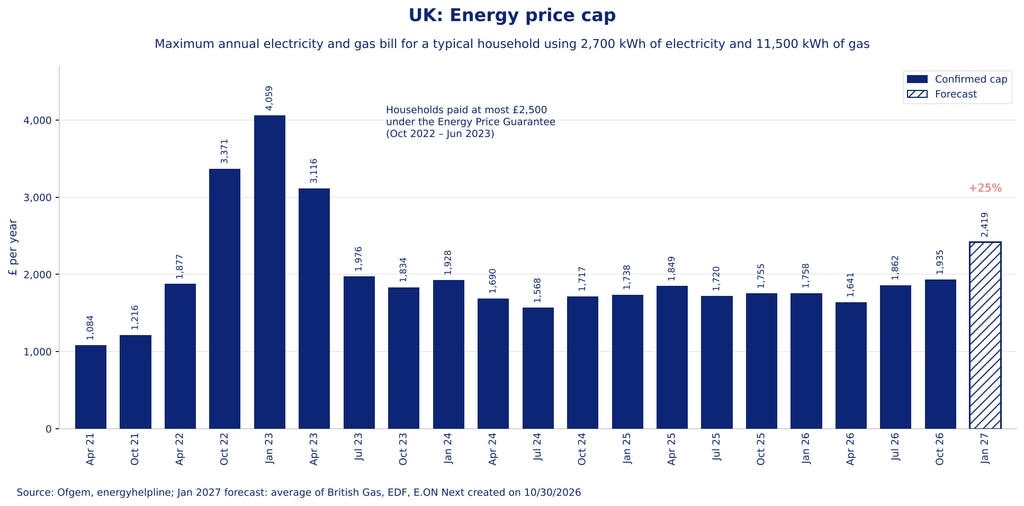
While a £100 cash boost is always welcome, estimates suggest that households’ annual energy bills are set to rise by several times as much due to surging energy prices, with an increase of around 25%.
Abolishing the standing charge would also mean gas bills become more closely linked to consumption. Meanwhile, fuel at the pump will remain 5p cheaper until July 2027.
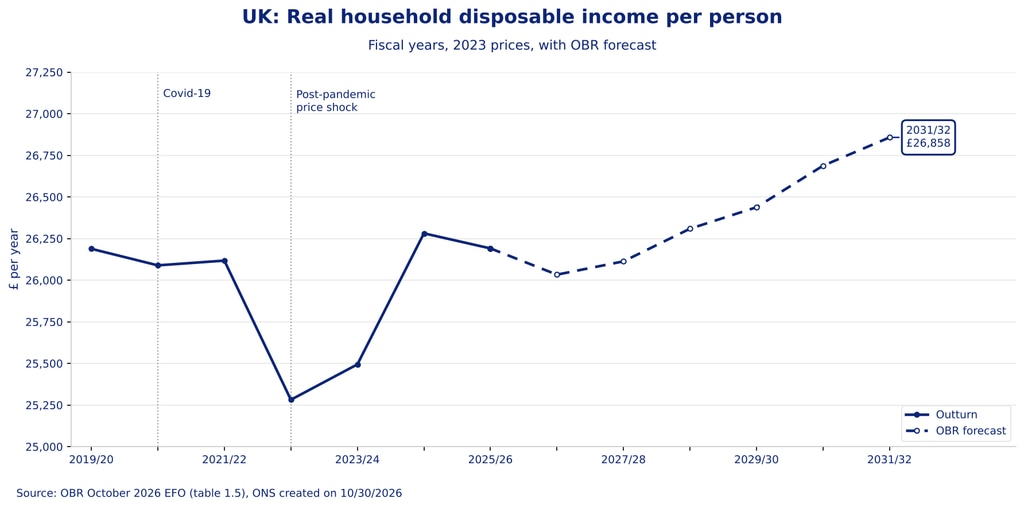
As a result of the energy price shock, household disposable income is projected to fall until early 2028, leaving households no better off than before the pandemic. In other words, almost a decade of stagnation.
2. State pensions: Necessary reform, but years away
The policy: The government will adjust the state pension triple lock from April 2030, after the end of this Parliament.
My assessment: Under the current triple lock, state pensions rise by whichever is highest: inflation, earnings growth or 2.5%.
If this policy were to continue indefinitely, pension spending would place an increasingly unsustainable burden on public finances.
Under the adjustment, pensions will rise by at least 2.5% or inflation, while maintaining their value relative to long-run earnings growth.
This weakened triple lock is a necessary adjustment in my view. However, it only takes effect from 2030, another example of how much of Labour’s potential savings have been pushed into the future.
3. Minimum wage: A more modest increase offers employers some relief
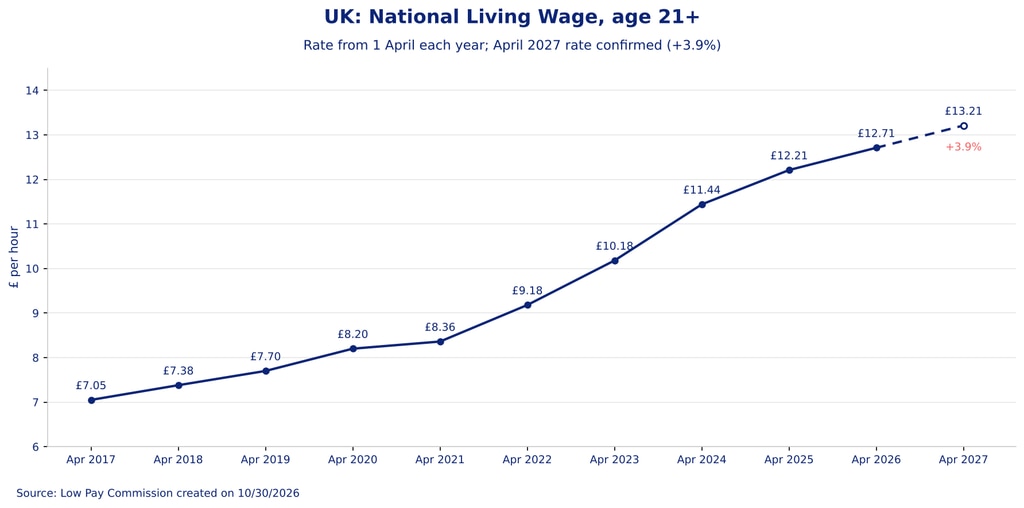
The policy: All hourly minimum wage rates will increase by approximately 3.9% from April 2027.
- Age 21 and above (National Living Wage): £13.21, up from £12.71
- Ages 18–20: £11.27, up from £10.85
- Ages 16–17 and eligible apprentices: £8.31, up from £8.00
My assessment: For the first time in years, minimum wages are increasing at a slightly lower rate than median pay, although only marginally.
The UK now has one of the highest wage floors relative to median pay among advanced economies.
This has created significant wage compression at the bottom of the pay distribution, with potentially unintended consequences for workers. Why take on more responsibility if the additional pay is limited?
It has also contributed, in my assessment, to the difficult hiring environment, particularly for smaller businesses facing rising labour costs. Our Spring/Summer Hiring Trends Update found that 52% of employers had reduced their Q2/Q3 headcount plans following the previous National Living Wage increase, with 46% cutting entry-level roles specifically.
A more modest increase is therefore a welcome adjustment for the labour market.
4. Visa changes: A welcome boost for skilled worker mobility
The policy: The government will retain a two-year Graduate visa for graduates of universities with strong compliance records and labour market outcomes, partially reversing a planned reduction to 18 months.
It also plans to make it easier for certain highly skilled sponsored workers to change jobs. Eligible workers will have up to six months, rather than the current 60 days, to find a new employer if their sponsorship ends. The duration will depend on their previous employment, with implementation planned for 2027.
My assessment: Both are good policies.
The UK needs more skilled immigrants, not fewer. Allowing eligible graduates to stay longer is the right approach.
I also strongly support the proposed changes to the Skilled Worker visa.
When I was looking for a new job more than three years ago while on that visa myself, it turned out to be a substantial barrier.
Switching jobs requires a new sponsor, and workers who lose their jobs typically have just 60 days to find one.
This lock-in effect can prevent workers from moving to better opportunities, reducing labour market mobility and, ultimately, economic growth.
Giving eligible workers more time to secure a new role is a positive step, although the benefits will depend on how widely the new rules apply.
5. First-time buyer subsidies: More demand, not more homes
The policy: Under the new Your First Home scheme, eligible first-time buyers will be able to purchase a new-build home with a deposit of as little as 2.5%, supported by a government-backed equity loan covering 20% of the purchase price.
My assessment: As a UK homeowner myself, I say ‘thank you’, but as an economist, I say ‘no, thanks!’
This is another example of a government subsidising demand for homes rather than addressing the supply side.
According to some estimates, the UK is short of around six million homes. The only sustainable way to improve affordability is to address this chronic housing shortage, yet the government looks increasingly unlikely to meet its housing target.
Subsidising first-time buyers risks pushing up house prices without meaningfully improving affordability. It can also create additional financial stability risks.
6. Savings and rental taxes: More pressure on landlords and renters
The policy: Tax rates on savings and property income will rise by a further two percentage points from April 2027, while the planned reduction to the £20,000 annual cash ISA allowance has been scrapped.
My assessment: This increases the tax burden on savers and landlords.
While savers can shelter some of their money in a tax-exempt cash ISA, landlords have fewer options.
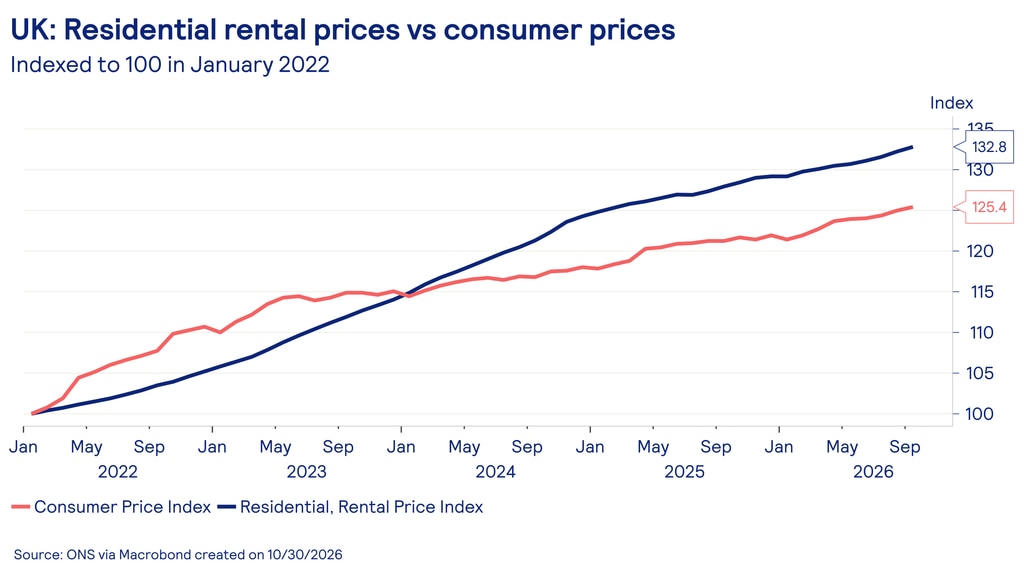
Higher interest rates, together with the additional requirements introduced by the Renters’ Rights Act, have already put pressure on landlords. Some have responded by selling properties, reducing the supply of rental accommodation.
The consequence is further pressure on rents and household living costs. Higher taxes risk adding to those pressures.
These are just a few of the nearly 100 measures announced in the full Budget. From a macroeconomic perspective, most are relatively small adjustments unlikely to make a significant difference to the overall outlook.
What does the Budget mean for recruiters? Hiring likely to remain cautious
The good news is that Labour has delivered a relatively low-impact Budget. Financial markets reacted calmly, and after two years of significant tax increases under Rachel Reeves, Chancellor John Healey has opted for a more cautious approach.
Most of the measures are unlikely to have a substantial impact on economic growth or the labour market, in either direction.
But that is also the bad news.
The UK continues to face significant challenges, from weak growth and high public debt to a labour market struggling to regain momentum. More substantial reforms are needed, yet many of the difficult decisions have once again been postponed.
From a recruitment perspective, the Budget was something of a non-event.
Expect hiring to remain cautious at least until early next year. The more modest minimum wage increase and proposed visa reforms are welcome developments, but there is little here to give employers a significant new reason to expand their hiring plans.
Ultimately, this Budget avoids adding substantially to the pressure on the labour market, but misses an opportunity to help get it moving again.
Explore articles